
So on Tuesday, which is my marathon class day, I actually ended up paying attention for all my classes, even the day after finishing a paper. It was interesting, because in Theology we ended up talking about the ontology of the Trinity (we had an organized class debate about Trinity from Christian and Muslim perspectives that day), and for the first time I finally understood what this meant. We'd covered ontological v. teleological reasoning in a class I had last year, but I never quite got the meanings.
Riding off that excitement (yes, I'm a dork), in Honours Seminar that night we had our final discussion about
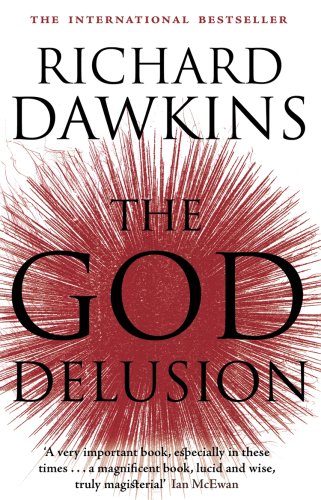
where the subject of ontology came up. In essence, our professor had spent all the time leading up to this discussion supporting Dawkins' arguments within the book, and then showed us how the arguments broke down because of their initial ontological assumptions, which is basically what I thought as well, but with a lesser vocabulary.
It was quite an interesting read because of this; I found myself seeing the arguments as not incorrect, but as fundamentally wrong as they attempted to use the natural to argue against existence of the supernatural.
Anyway, this is probably not that exciting to read, but if anyone feels like discussing this book or anything related to it, please let me know!
When I finally got home from class, I ate and decided to take a nap at 8 pm and was awoken by screaming and shouts of "Snow!!!" I thought I was dreaming at first, but then when I realized it was real, I thought it was already morning. Probably not a good sign concerning my sleeping patterns. Anyway though, there was snow in London in October! I found out the next day in class that this was the first time it had snowed in central London since the 1930s.


 Posts
Posts


1 comment:
We discussed Dawkins in my ethics class at PSU. But we looked at an entirely different area of his work- he had this argument that human altruism is actually a result of our genes "acting" selfishly. It's a pretty mind blowing (not to say easily acceptable) argument. I can't remember the specifics of the argument, but he gave an example of how our bodies are more susceptible to certain diseases before we hit puberty because their incidence correlates to a decreased chance of catching diseases that sterilize the human being after puberty. So our genes in a way are more "complacent" with risking the death of their body before they it can reproduce.
Post a Comment